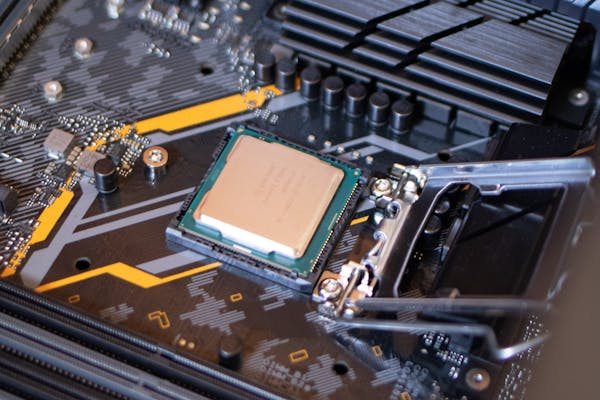
The evolution of computer Central Processing Units (CPUs) is a tale of relentless innovation and ever-increasing performance. With each new generation, CPUs become more powerful, efficient, and capable of handling complex tasks with ease. For gamers, selecting the best CPU for gaming is crucial, as it can significantly impact the overall gaming experience. This article delves into the latest updates in computer CPUs, exploring advancements in architecture, performance benchmarks, and highlighting the best CPUs for gaming available today.
The Evolution of CPU Architecture
From Single-Core to Multi-Core Processors
The journey of CPUs began with single-core processors, where a single processing unit handled all computational tasks. As technology advanced, the demand for higher performance and multitasking capabilities led to the development of multi-core processors. These CPUs feature multiple processing units, or cores, within a single chip, allowing for parallel processing and significantly improving overall performance.
The Rise of Hyper-Threading and Simultaneous Multithreading (SMT)
Hyper-Threading (HT) and Simultaneous Multithreading (SMT) are technologies that further enhance the performance of CPUs by allowing each core to handle multiple threads simultaneously. Intel’s Hyper-Threading and AMD’s Simultaneous Multithreading are prime examples of these technologies. By enabling each core to execute two threads at once, HT and SMT effectively double the number of threads a CPU can handle, improving multitasking and overall efficiency.
The Shift to Smaller Process Nodes
Advancements in semiconductor manufacturing have enabled the production of CPUs with smaller process nodes, measured in nanometers (nm). Smaller process nodes mean more transistors can fit on a chip, leading to increased performance and energy efficiency. Over the years, we’ve witnessed the transition from 32nm to 22nm, 14nm, 10nm, 7nm, and most recently, 5nm and even 3nm process nodes. These smaller nodes are crucial for the development of high-performance CPUs.
The Latest CPU Technologies
Intel’s Alder Lake Architecture
Intel’s Alder Lake architecture represents a significant leap in CPU design. Released in late 2021, Alder Lake introduced a hybrid architecture combining high-performance cores (P-cores) and high-efficiency cores (E-cores) within a single CPU. This design allows for better performance-per-watt and improved multitasking capabilities. The P-cores handle demanding tasks such as gaming and content creation, while the E-cores take care of background tasks and energy-efficient processing.
Key Features of Alder Lake
- Performance Hybrid Architecture: Combines P-cores and E-cores for optimized performance and efficiency.
- Intel Thread Director: A hardware-based scheduler that intelligently allocates tasks to the appropriate cores.
- DDR5 and PCIe 5.0 Support: Alder Lake CPUs support the latest memory and expansion standards, enhancing overall system performance.
- Improved Overclocking Capabilities: Enthusiasts can push Alder Lake CPUs to higher frequencies for increased performance.
AMD’s Zen 3 and Zen 4 Architectures
AMD’s Zen 3 architecture, introduced in late 2020, brought substantial performance improvements over its predecessors. Built on a 7nm process node, Zen 3 CPUs feature an optimized core layout, reducing latency and improving overall efficiency. This architecture powers the Ryzen 5000 series processors, which have gained acclaim for their excellent gaming and productivity performance.
Key Features of Zen 3
- Unified Cache Design: Reduces latency by allowing cores to share a larger cache pool.
- Higher Instructions Per Clock (IPC): Improved IPC performance for better single-threaded and multi-threaded tasks.
- Energy Efficiency: Optimized power consumption for better performance-per-watt.
In 2023, AMD unveiled its Zen 4 architecture, continuing the tradition of innovation. Built on a 5nm process node, Zen 4 CPUs bring even higher performance and efficiency gains. These processors are expected to power the Ryzen 7000 series, promising a new level of performance for gaming and productivity.
Key Features of Zen 4
- 5nm Process Node: Enables higher transistor density for improved performance and energy efficiency.
- Enhanced IPC: Further boosts single-threaded and multi-threaded performance.
- DDR5 and PCIe 5.0 Support: Ensures compatibility with the latest memory and expansion technologies.
Apple’s M1 and M2 Chips
Apple’s transition from Intel CPUs to its custom-designed M1 chips marked a significant milestone in the CPU industry. The M1, introduced in late 2020, is based on ARM architecture and incorporates a unified memory architecture, integrating CPU, GPU, and other components into a single chip. This design offers exceptional performance and energy efficiency, particularly in Apple’s MacBook and iMac lineups.
In 2022, Apple introduced the M2 chip, building on the success of the M1. The M2 features improved performance cores, enhanced neural engines, and better energy efficiency, making it a formidable contender in the CPU market.
Key Features of M1 and M2
- Unified Memory Architecture: Integrates CPU, GPU, and other components for faster data access and improved performance.
- High Performance-per-Watt: Offers exceptional energy efficiency, ideal for laptops and other portable devices.
- Optimized for macOS: Tailored to deliver the best performance in Apple’s ecosystem.
Performance Benchmarks and Gaming
Benchmarking CPU Performance
To determine the best CPU for gaming, performance benchmarks play a crucial role. Benchmarks provide objective data on how CPUs perform in various tasks, including gaming, content creation, and everyday computing. Key benchmarks to consider include:
- Cinebench R23: Measures multi-core and single-core performance using 3D rendering tasks.
- Geekbench 5: Provides a comprehensive overview of CPU performance across a range of tasks.
- 3DMark: Focuses on gaming performance, testing CPU and GPU capabilities in gaming scenarios.
The Best CPUs for Gaming This Year
Based on recent benchmarks and reviews, the following CPUs stand out as the best options for gaming this year:
1. Intel Core i9-13900K
The Intel Core i9-13900K, part of the Alder Lake lineup, is a top-tier CPU for gaming enthusiasts. With its combination of P-cores and E-cores, the i9-13900K delivers exceptional performance in gaming and multitasking. It boasts high clock speeds, excellent single-threaded performance, and support for the latest technologies like DDR5 and PCIe 5.0.
Key Features:
- 8 P-cores and 8 E-cores for optimized performance.
- High clock speeds and improved IPC.
- Intel Thread Director for efficient task allocation.
- Support for DDR5 and PCIe 5.0.
2. AMD Ryzen 9 7950X
The AMD Ryzen 9 7950X, based on the Zen 4 architecture, is a powerhouse for gaming and productivity. With 16 cores and 32 threads, it excels in multi-threaded tasks and offers impressive gaming performance. The Ryzen 9 7950X also benefits from AMD’s unified cache design and enhanced IPC, ensuring smooth gameplay and fast load times.
Key Features:
- 16 cores and 32 threads for superior multitasking.
- Enhanced IPC for better single-threaded performance.
- DDR5 and PCIe 5.0 support.
- Energy-efficient 5nm process node.
3. Apple M2 Max
For gamers in the Apple ecosystem, the M2 Max is a noteworthy contender. While not traditionally associated with gaming, Apple’s custom silicon has proven its mettle in delivering exceptional performance across a range of tasks. The M2 Max offers a high-performance GPU, fast memory access, and efficient power consumption, making it suitable for gaming on Mac devices.
Key Features:
- Unified memory architecture for faster data access.
- High-performance GPU for smooth gaming experiences.
- Energy-efficient design.
- Optimized for macOS and Apple software.
Future Trends in CPU Development
The Transition to 3nm and Beyond
As semiconductor technology continues to advance, the industry is moving towards even smaller process nodes. The transition to 3nm and beyond promises higher transistor density, improved performance, and better energy efficiency. Leading manufacturers like TSMC and Samsung are already working on 3nm process nodes, with plans to introduce 2nm and 1nm nodes in the coming years.
The Integration of AI and Machine Learning
Artificial Intelligence (AI) and Machine Learning (ML) are becoming integral parts of modern CPUs. These technologies enable CPUs to perform tasks such as real-time language translation, image recognition, and predictive analytics more efficiently. As AI and ML algorithms become more sophisticated, future CPUs will incorporate dedicated hardware accelerators to handle these tasks, further enhancing overall performance.
The Rise of Quantum Computing
Quantum computing represents a paradigm shift in computational capabilities. While still in its infancy, quantum computing has the potential to solve complex problems that are currently beyond the reach of classical computers. Researchers and companies are making significant strides in developing quantum processors, and in the future, we may see the integration of quantum and classical computing for unprecedented performance gains.
Conclusion
The latest updates in computer CPUs highlight the rapid pace of innovation and the continuous quest for higher performance and efficiency. From Intel’s Alder Lake and AMD’s Zen 4 to Apple’s M2 chips, the advancements in CPU architecture and technology are reshaping the computing landscape. For gamers, selecting the best CPU for gaming is crucial to ensure smooth gameplay, fast load times, and an overall immersive experience.